
Business
The Messonde: Engineering Precision in the Age of Data


In the quiet corridors of high-tech laboratories and the rugged expanses of environmental monitoring stations, a silent hero operates without fanfare: the Messonde. Derived from the German words Messen (to measure) and Sonde (probe), the Messonde represents a pinnacle of human ingenuity in the quest to quantify the invisible. Whether it is tracking the microscopic thickness of a coating on an airplane wing or measuring the temperature of a compost pile to ensure agricultural safety, these devices are the sensory organs of our modern industrial and scientific world.
1. Defining the Messonde: More Than Just a Sensor
To the uninitiated, a Messonde might seem like a simple sensor. However, in technical terms, it is a sophisticated transducer system. While a basic sensor might detect a change in the environment, a Messonde is designed to penetrate a medium—be it liquid, solid, or gas—and provide a high-fidelity data stream that can be recorded, analyzed, and used for critical decision-making.
The fundamental architecture of a modern Messonde typically includes:
- The Sensing Element: The physical tip that interacts with the environment (e.g., a thermocouple, a pH electrode, or an inductive coil).
- Signal Conditioning: Internal circuitry that converts raw physical phenomena (like electrical resistance or voltage) into a clean, digital signal.
- The Housing: Often made of stainless steel, ceramics, or specialized polymers, the housing must protect the delicate internals from high pressure, corrosive chemicals, or extreme temperatures.
2. The Historical Evolution of Probing Technology
The journey of the Messonde mirrors the history of the Scientific Revolution. Centuries ago, measurement was a tactile, human-centric affair. If a blacksmith wanted to know the heat of his forge, he relied on the color of the glow. However, as science progressed, the need for objective, repeatable data led to the birth of the first “probes.”
Early precursors include:
- The Thermoscope (16th Century): Developed by pioneers like Galileo, this was one of the first instances of a probe using the expansion of air to indicate temperature changes.
- The Barometer (17th Century): Evangelista Torricelli’s mercury-filled tube was essentially a pressure Messonde, probing the weight of the atmosphere.
- The Industrial Boom: In the 19th and 20th centuries, the rise of electronics allowed for the miniaturization of these probes. No longer were they bulky glass tubes; they became sleek, electronic needles capable of being inserted into engines, human arteries, and deep-sea trenches.
3. Categories of Messonde Technology
The versatility of the Messonde is best understood through its various specializations. Depending on the physical property being measured, these devices are categorized into several critical types.
A. Material and Surface Analysis (Schichtdickenmessung)
In manufacturing, the “Messonde F1” is a legendary tool used for measuring layer thickness. Using magnetic induction or eddy current methods, these probes can tell an engineer exactly how many micrometers (µm) of paint or anti-corrosive coating have been applied to a metal surface without ever damaging the material. This is crucial in the automotive and aerospace industries, where even a slight variation in coating can lead to catastrophic failure or unnecessary weight.
B. Environmental and Agricultural Probes
Environmental Messonden are often designed for “deployment and forget” scenarios.
- Soil Probes: These measure moisture, nutrient levels (NPK), and temperature deep within the earth. They allow farmers to practice “Precision Agriculture,” applying water and fertilizer only where the Messonde indicates a need.
- Water Quality Sondes: These multi-parameter probes are submerged in rivers or oceans to monitor pH, dissolved oxygen, and turbidity. They act as early warning systems for pollution or ecological shifts.
C. Medical and Diagnostic Sondes
In the medical field, the Messonde takes on a delicate form. Periodontal probes (Zahnsonden) are used by dentists to measure the depth of pockets in the gums, providing a numerical “map” of oral health. On a more complex level, hemodynamic probes can be inserted into blood vessels to monitor real-time oxygen saturation or blood flow during surgery.
4. The Physics of Precision: How It Works
The “magic” of a Messonde lies in its ability to translate a physical state into a number. This usually happens through one of three primary physical principles:
- Resistive Sensing: As temperature or pressure changes, the electrical resistance of a material (like platinum in an RTD probe) changes in a predictable way.
- Inductive/Capacitive Sensing: By creating an electromagnetic field, a Messonde can detect the presence of nearby objects or measure the thickness of non-conductive materials.
- Optical Sensing: Modern Messonden often use fiber optics to measure light absorption or fluorescence, allowing for chemical analysis at the molecular level without electrical interference.
5. The Messonde in the Era of Industry 4.0 and IoT
We are currently witnessing a transformation of the Messonde from a standalone tool into a node in the Internet of Things (IoT). In “Smart Factories,” Messonden are no longer just connected to a handheld screen; they are connected to the cloud.
This connectivity enables Predictive Maintenance. Imagine a Messonde inside a high-speed turbine. It constantly monitors vibration and heat. Before the turbine breaks, the data indicates a subtle, abnormal trend. The system automatically orders a replacement part and schedules a technician. This transition from “measuring” to “predicting” is the hallmark of modern metrology.
6. Challenges in Design and Calibration
Building a reliable Messonde is not without its hurdles. Two major enemies of precision are drift and interference.
- Drift: Over time, exposure to the elements can cause a probe to “lose its way,” giving readings that are slightly off. This necessitates regular calibration—the process of comparing the Messonde against a known standard.
- Interference: In an industrial setting, electromagnetic noise from heavy machinery can “pollute” the signal of a delicate probe. High-end Messonden use sophisticated shielding and digital signal processing (DSP) to filter out this noise.
7. The Future: From Micro to Nano
As we look forward, the Messonde is shrinking. MEMS (Micro-Electromechanical Systems) technology allows for probes to be etched onto silicon chips no larger than a grain of salt. We are entering the age of the Nanosonde, where devices could potentially be injected into the bloodstream to monitor glucose levels in real-time or embedded into the “skin” of buildings to detect structural cracks before they become visible to the human eye.
Furthermore, the integration of Artificial Intelligence directly into the probe (Edge AI) means the Messonde of 2026 doesn’t just send raw data; it sends answers. Instead of telling a technician the temperature is 180°C, it tells the system: “The temperature is rising too fast; check the cooling valve.”
Conclusion
The Messonde is much more than a German technical term; it is a fundamental bridge between the physical world and our digital understanding of it. From the depths of the ocean to the sterile rooms of a chip manufacturer, these instruments provide the empirical truth that allows our complex society to function safely and efficiently. As they become smaller, smarter, and more connected, they will continue to be the eyes and ears of humanity, probing the unknown and bringing back the clarity of data.
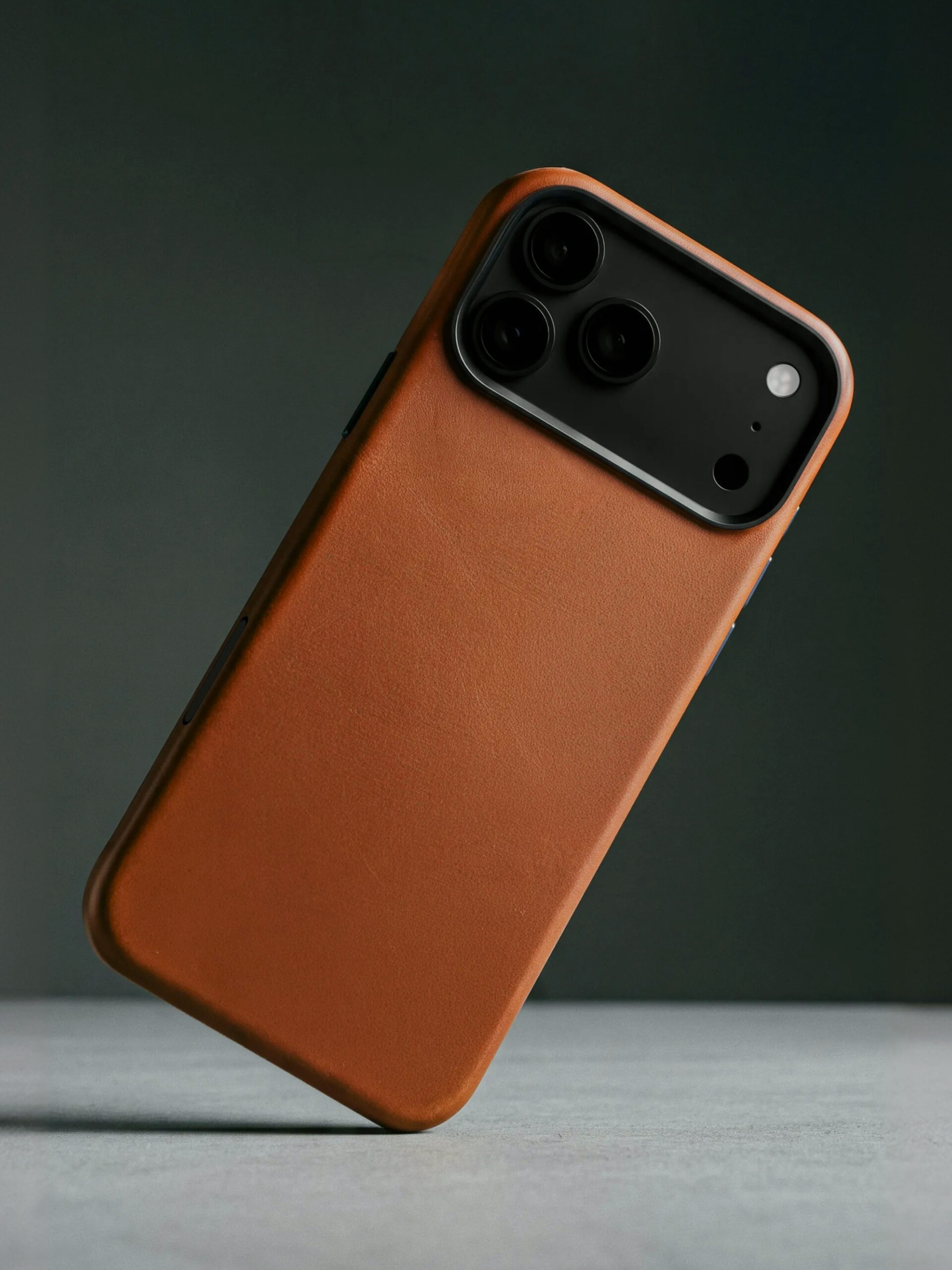
The difficulty increases when the exterior is fine leather. Add material between the magnet and accessory and the system has to balance attraction, alignment, thickness and heat.
That makes MagSafe less a styling feature than an exercise in tolerances.
The Physics Beneath The Leather
MagSafe relies on a precisely arranged magnetic ring to guide compatible accessories into alignment. A case therefore cannot treat the magnet as an afterthought.
Leather presents an interesting engineering constraint. Full-grain hide has natural substance and variation, so the internal architecture has to account for that material rather than treating it as a cosmetic skin over a standard plastic case. Greater separation between the magnetic array and accessory can weaken effective pull, while poor internal construction can introduce unnecessary thickness or pressure points.
RYAN London integrates a full ring of magnets beneath the leather. Its iPhone 18 cases are designed so MagSafe chargers, wallets and mounts can align through the case, while a soft microfibre interior protects the phone’s surface.
The Technicality Behind Thinness
For a fast wireless charging leather case, magnetic alignment matters because wireless power transfer depends on the relationship between transmitter and receiver coils. Misalignment or unnecessary separation can reduce charging efficiency and increase losses that manifest as heat.
This is where the engineering beneath the surface becomes important. The magnet needs to sit consistently in relation to the phone and the case exterior, because even small changes in spacing can affect how an accessory seats and holds.
The goal is not merely to make leather thinner. It is to control the layers around the magnetic array so the finished case remains slim, stable and responsive.
Engineering You Shouldn’t See
RYAN London describes its iPhone 18 cases as precision-fitted shells made from vegetable-tanned, full-grain leather, with MagSafe integrated beneath the exterior. The company also highlights a microfibre lining, raised protection and a slim shell construction.
The leather supplies the tactile experience: grain, grip, scent and patina. The structure underneath determines whether the technology behaves naturally.
For anyone looking for a MagSafe leather case iPhone 18 shoppers can use without sacrificing the character of real leather, the interesting story is therefore not the visible finish. It is the invisible architecture underneath it.
A good case makes the engineering disappear. You simply hear the snap, feel the alignment and start charging.

Discrimination based on gender identity is a significant issue that continues to affect many employees in the workplace. Individuals who identify as transgender or non-binary often face discrimination, harassment, and unequal treatment because of their gender identity. Despite legal protections under federal and state laws, many employees still experience bias, and it is crucial to know your rights if you are subjected to gender identity discrimination.
NJ Employment Lawyers is committed to advocating for employees who have faced discrimination based on their gender identity. If you have been harassed, discriminated against, or denied opportunities due to your gender identity, our experienced team of attorneys can help protect your rights and seek justice for the harm caused.
What is Gender Identity Discrimination?
Gender identity discrimination occurs when an employee is treated unfairly because of their gender identity or expression. Gender identity refers to an individual’s internal sense of their gender, which may or may not align with the sex they were assigned at birth. Discrimination can occur when an employee is treated differently because of their gender identity, their choice of clothing, or how they present themselves in the workplace.
Examples of gender identity discrimination include:
- Harassment: Offensive comments, jokes, slurs, or other forms of hostile behavior targeting an employee because of their gender identity or expression.
- Denial of opportunities: Being passed over for promotions, job assignments, or raises due to gender identity.
- Failure to accommodate: Denying an employee the ability to use the restroom or locker room that matches their gender identity, or not providing reasonable accommodations for gender expression.
- Wrongful termination: Being fired or forced to resign because of your gender identity or gender expression.
- Unequal treatment: Treating employees differently because of their gender identity in a way that negatively impacts their career or work environment.
Why You Need an Employment Lawyer for Gender Identity Discrimination Claims
If you have faced gender identity discrimination, it’s crucial to understand your legal rights and take the appropriate steps to protect them. Here’s how NJ Employment Lawyers can help:
1. Understanding Your Rights Under the Law
Gender identity discrimination is prohibited under federal and state laws, including Title VII of the Civil Rights Act of 1964 and the New Jersey Law Against Discrimination (NJLAD). These laws protect employees from discrimination based on gender identity or expression. Our attorneys will help you understand these laws and ensure that you are treated fairly in the workplace.
2. Investigating Your Claim
To prove gender identity discrimination, you need to gather evidence that shows you were treated unfairly due to your gender identity. Our attorneys will assist you in collecting evidence, such as emails, witness statements, and other documentation that supports your claim of discrimination or harassment based on gender identity.
3. Filing a Formal Complaint
If you have faced discrimination, we can help you file a formal complaint with the Equal Employment Opportunity Commission (EEOC) or the New Jersey Division on Civil Rights (NJDCR). Our team will guide you through the process and ensure that your complaint is filed correctly and within the appropriate time frame.
4. Pursuing Compensation for Damages
If your gender identity discrimination claim is successful, you may be entitled to compensation for lost wages, emotional distress, and other damages. Our attorneys will fight to ensure you receive the compensation you deserve for the harm caused by discriminatory practices.
5. Protecting You from Retaliation
Employees who report discrimination based on gender identity are protected from retaliation under the law. If your employer retaliates against you by demoting you, firing you, or subjecting you to further harassment, we will take immediate action to protect your rights and stop the retaliation.
How NJ Employment Lawyers Can Help
If you have experienced gender identity discrimination in the workplace, NJ Employment Lawyers is here to help. Our attorneys have a deep understanding of the laws that protect against gender identity discrimination and are committed to ensuring that you are treated fairly and justly under the law.
We will guide you through every step of the legal process, from gathering evidence to filing complaints and representing you in court. Our goal is to ensure that your rights are protected, and that you are fairly compensated for any damages caused by discrimination.
For more information on how we can assist with your gender identity discrimination claim, visit our Gender Discrimination page.
Contact Information
Address: 101 Eisenhower Pkwy #300, Roseland, NJ 07068, United States
Email: tom@cmlaw.com
Phone: (973) 358-7027
Hours: Monday – Friday : 9 AM–5 PM, Saturday: Closed, Sunday (Easter): Closed
Texas Hold’em has transitioned from smoke-filled casino backrooms to a highly analytical global mind sport. Today, millions of players connect through dedicated online platforms—frequently searched as “홀덤사이트” (Hold’em sites)—to test their mathematical accuracy, psychological resilience, and bankroll discipline.
The digital shift allows players to sit at virtual tables across the globe 24/7. However, the convenience of online play introduces unique structural challenges, technical requirements, and strategic differences compared to live poker.
1. Pillars of a Secure Online Hold’em Platform
In an environment where physical tells are eliminated, the security and mathematical integrity of the software are the only things standing between a fair game and a corrupted one. When evaluating an online platform, professional players prioritize three technical benchmarks:
RNG (Random Number Generator) Certifications
A legitimate platform must prove that its card distribution is genuinely random. This is validated through external, third-party testing labs like iTech Labs, GLI (Gaming Laboratories International), or eCOGRA. These institutions rigorously audit millions of simulated hands to ensure the algorithm has no statistical bias or predictable patterns.
Traffic and Liquidity
A poker room is only as good as its active player pool. High traffic ensures that games run around the clock across all stakes—from micro-blinds to high-stakes cash games. Furthermore, higher player liquidity spreads out the concentration of highly skilled regulars (often called “sharks”), making the ecosystem healthier for casual players.
Anti-Collusion and Bot Detection
Because players cannot see each other, online platforms are vulnerable to software bots, Real-Time Assistance (RTA) programs, and collusion (players sharing hole-card information via secondary communication). Reputable platforms invest heavily in AI-driven security systems that analyze data points like betting patterns, cursor movements, and decision-making speeds to identify and ban malicious accounts instantly.
2. Core Formats: Cash Games vs. Tournaments
Modern Hold’em sites generally segment their ecosystems into two fundamental structures. Success in one does not automatically translate to the other, as they require distinct tactical frameworks.
| Metric | Cash Games (Ring Games) | Tournaments (MTTs / Sit & Gos) |
| Chips Value | Equal to direct monetary value. | Virtual value; survival is mandated by rising blinds. |
| Stack Depth | Typically deep ($100\text{BB}+$ or more). Allows for extensive post-flop play. | Fluctuates wildly. Often requires short-stack strategy ($10\text{BB}-25\text{BB}$). |
| Variance | Moderate. Highly dependent on win-rate consistency. | Extreme. A player may go weeks without a major score, followed by a massive payout. |
| Strategic Goal | Maximize expected value ($\text{EV}$) in every individual hand. | Survive, accumulate chips, and navigate the ICM (Independent Chip Model) near the money bubble. |
3. Adapting to the Digital Environment
Playing Hold’em online requires a significant adjustment from the physical felt. The absence of physical tells changes the nature of data gathering.
[Live Poker]  --> Focuses on: Physical tells, speech play, live timing, macro table dynamics.
[Online Poker] --> Focuses on: Betting sizing, precise timing tells, HUD statistics, multi-tabling efficiency.
- HUDs (Heads-Up Displays): Software like PokerTracker or Holdem Manager tracks opponents’ historical decisions. Key metrics include VPIP (Voluntarily Put Money in Pot) and PFR (Pre-Flop Raise). A VPIP over $40\%$ generally indicates a loose, recreational player, while a VPIP under $15\%$ points to a highly conservative, tight player.
- The Power of Multi-Tabling: Online players can play 4, 8, or even 12 tables simultaneously. While this multiplies the volume of hands played per hour, it slashes the time available for deep, creative decision-making, shifting the game toward strict, fundamental adherence to a pre-defined strategy.
- Timing Tells: Automated actions or instant checks often signal weakness or a lack of complex decision-making. Conversely, a prolonged tank followed by a massive river bet online requires a calculated assessment of whether the opponent is calculating a bluff or maximizing value.
4. Fundamental Strategy for Modern Online Pools
To achieve profitability over a significant sample size (e.g., $50,000+$ hands), reliance on intuition must be replaced with fundamental principles.
Positional Dominance
The single greatest mathematical advantage in Hold’em is acting last on the flop, turn, and river (holding the “Button”). Acting last grants complete information on how your opponents reacted to the community cards before you have to risk a single chip. Online ranges should be strictly tight in early positions (UTG) and highly aggressive and wide in late positions (Cutoff/Button).
Constructing Aggressive Ranges
Passive play (calling raises pre-flop or checking down draws) is the primary source of losses for novice players. By maintaining a betting initiative (being the pre-flop raiser or continuous bettor), you build two ways to win the pot: having the best five-card hand at showdown, or forcing your opponent to fold immediately (fold equity).
Mathematical Discipline: Implied Odds & Pot Odds
Online poker leaves no room for guessing whether a drawing hand is worth playing. If an opponent bets $50 into a $100 pot, you must call $50 to win a total pot of $200. This means you need more than $25\%$ equity to make a profitable call. If your flush draw only hits $18\%$ of the time by the next card, you must fold unless you can guarantee extracting enough future bets on the river to compensate (implied odds).
5. Bankroll Management: The Ultimate Shield
The math of Texas Hold’em dictates that even a perfect player will experience prolonged downswings due to statistical variance. Without strict bankroll management (BRM), bankruptcy is inevitable.
As a professional rule of thumb:
- Cash Game Players should maintain at least 40 to 50 buy-ins for the specific stake they are playing (e.g., to play $1/$2 Cash with a $200 maximum buy-in, a bankroll of at least $8,000–$10,000 is required).
- Tournament Players face higher variance and should aim for 100+ buy-ins of their average tournament entry fee to withstand long dry spells before hitting a major final table.
Ultimately, navigating the world of online Hold’em sites successfully relies on separating emotion from execution. Treat the virtual table as an arena of percentages, choose platforms that guarantee cryptographic and computational fairness, and protect your capital above all else.

Engineering the Snap: How RYAN London Masters MagSafe Attraction in Fine Italian Leather

How NJ Employment Lawyers Can Help with Discrimination Based on Gender Identity
The Evolution of Online Hold’em: Navigation, Mechanics, and Strategic Mastery

How Everyday Items Are Becoming Meaningful Style Statements

WaveTechGlobal: The Tech Guru Shaping the Future of Innovation

The HakEvent 2024: The Online Event of the Year
Engineering the Snap: How RYAN London Masters MagSafe Attraction in Fine Italian Leather
How NJ Employment Lawyers Can Help with Discrimination Based on Gender Identity
The Evolution of Online Hold’em: Navigation, Mechanics, and Strategic Mastery
-
 Lifestyle10 months ago
How Everyday Items Are Becoming Meaningful Style Statements
-
 Technology2 years ago
WaveTechGlobal: The Tech Guru Shaping the Future of Innovation
-
 Business2 years ago
The HakEvent 2024: The Online Event of the Year
-

 Health2 years ago
What is the Cost for a Mobile Chiropractor Visit?
-

 News2 years ago
Ontpress FreshUpdates: The Future of Timely and Trustworthy Information
-

 Entertainment2 years ago
EmbersLasVegas Esports: The Ultimate Destination for Gamers and Fans
-

 Blog2 years ago
Better This Facts Tips from BetterThisWorld to Elevate Your Personal Growth
-

 Technology9 months ago
Navigating the Digital Maze: Understanding The Error Llekomiss and How to Resolve It