
Technology
Preparing Businesses for Google AI Search

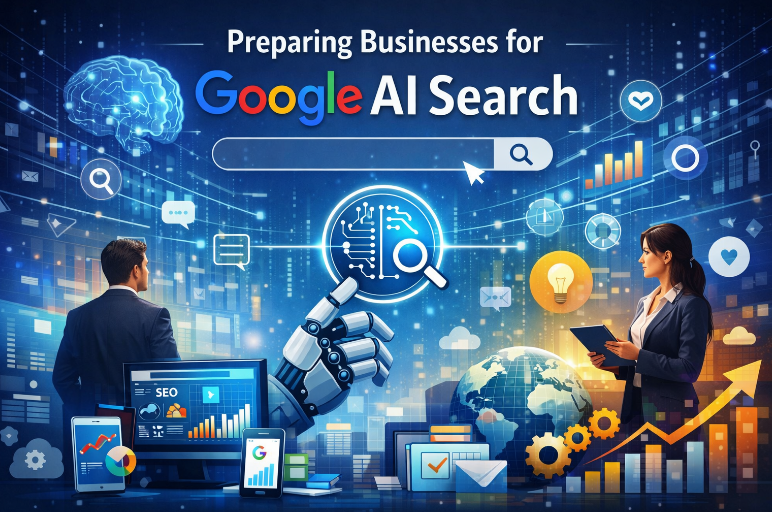
The way people perform searches on the internet is changing rapidly, and businesses are required to adapt to the changing trends to remain visible. Google is changing the way people perform searches on the internet with the advent of artificial intelligence technology. The artificial intelligence technology is now capable of analyzing the intent of users to provide better results. For businesses that require Google to be visible to their customers, Google AI search is becoming extremely important.
Understanding the Shift Toward AI Search
The conventional search engine algorithms focused primarily on keywords and backlinks for search engine optimization. Though these parameters are still important, AI search is more focused on understanding the intent of the search query. Instead of relying on keywords, AI search is designed to provide users with information that answers their question.
This means that businesses need to go beyond just relying on keywords and focus on creating content that is meaningful and informative. AI search is designed to evaluate information based on its usefulness.
Focus on High-Quality and Helpful Content
One of the best strategies for adapting to Google AI is to create content that is actually helpful to users. Google AI favors articles that answer questions clearly and provide accurate information to readers. Businesses need to concentrate on creating articles that are easy to read, well-structured, and relevant to their target audience.
The content needs to be about real-life problems faced by customers and offer them clear solutions to those problems. The more time visitors spend on a website because they find the content helpful, the better for the website.
Optimize for User Intent
Search engines that use AI technology focus a lot on what a user wants when he/she enters a query in the search engine. For instance, a user who wants to purchase a product might also want to read reviews and buying guides for that product instead of just reading a description of the product itself. Therefore, a business should study the user’s intent and create content that caters to that need. Informational content can be very useful in such a scenario.
Strengthen Website Authority and Trust
When it comes to AI-based search systems, the credibility of a website is taken into account before it is displayed on the results page. Therefore, it is important for a business to focus on gaining authority in the industry. This can be done by providing expert content on the website and attaining quality backlinks from credible websites.
By providing accurate company information, keeping the website updated, and ensuring the website is secure, a business can gain the trust of users as well as the search system. A trustworthy website is more likely to rank on the AI-based search results page.
Improve Website Experience
In recent times, the experience a user has on a website has become a significant factor for ranking on the results page. AI-based search systems take into consideration the experience users have on a particular website. If the website is slow to load or is difficult to navigate, users will leave the website as soon as they visit it.
Use Data and Analytics
Preparing for AI search also involves monitoring performance and adjusting strategies based on actual data. Google Analytics is one such tool that can help a business understand how users interact with their websites. Using such data and analytics tools can help a business optimize their content strategy by focusing more on topics that receive the highest attention.
Conclusion
The world of search is changing rapidly with the introduction of AI search. The only way for a business to successfully adapt to this changing world is by adapting to Google AI search. The key to adapting to Google AI search is by focusing on content that can help others and understanding user intent. The better a business can adapt to Google AI search, the better chances it has at surviving in the highly intelligent world of search.

By Drake Miller
For today’s American high school and college students, the “campus experience” has undergone a massive digital transformation. Whether you are attending a state university or completing an online high school diploma, the shift toward virtual classrooms has brought unprecedented flexibility. However, it has also created a unique challenge: the blurring of lines between “school time” and “me time.”
In my experience working with digital-first students, I’ve seen that the biggest hurdle isn’t the difficulty of the curriculum—it’s the environment. When your bedroom is your lecture hall and your laptop is both your textbook and your Netflix screen, how do you keep your grades up without sacrificing your sanity? Mastering how to balance school and social life is no longer just a “soft skill”—it is the ultimate survival tactic.
In this guide, I’m breaking down the science of online learning tips for students so you can excel in your courses while remaining the life of the party (or the group chat).
1. Master the “Time-Block” Method for Deep Work
The biggest myth of American student life is that you need to be “busy” to be successful. In reality, the highest-achieving students rely on deep work. Instead of a vague, overwhelming to-do list, try Time-Blocking. This involves assigning specific “containers” of the day to specific tasks to prevent schoolwork from bleeding into your social hours.
A sample productive routine for online school might look like this:
- 8:00 AM – 9:00 AM: Morning ritual (Coffee, gym, or sunlight).
- 9:00 AM – 11:30 AM: High-intensity study (The “Frog” task—writing papers or solving complex math).
- 12:00 PM – 1:00 PM: Social check-in and lunch.
- 1:00 PM – 4:00 PM: Attending Zoom lectures or responding to discussion boards.
- 6:00 PM onwards: Total digital shutdown for social life and relaxation.
If you find yourself overwhelmed by a mounting pile of assignments during these blocks, don’t be afraid to leverage external resources. I’ve often seen that using professional essay help at Myassignmenthelp.com can provide the necessary academic help to stay on track when the workload feels unmanageable. Delegating complex research or formatting tasks allows you to maintain your study-life balance without failing your courses.
2. Audit Your “Digital Drain” and App Fatigue
Before you can manage your time, you have to know where it’s leaking. Many students struggle with how to focus on online classes because the digital environment is designed for “micro-distractions.” In the US, the average Gen Z student spends over 4 hours a day on social media alone.
The Trap: Picking up your phone for a “two-minute break” from a Chemistry module, only to find yourself 40 minutes deep into a TikTok rabbit hole.
The Fix: Use built-in screen time trackers to identify which apps are eating your productivity. I recommend utilizing “Focus Modes” on iOS or Android to silence notifications from 9 AM to 2 PM. Treating your virtual lectures with the same “no-phone” respect as a physical classroom is the first step toward reclaiming your evenings.
3. Create a “Third Space” to Fight “Bedroom Burnout”
One of the hardest parts of online education is the lack of physical transition. When you study in bed, your brain stays in “rest mode,” making it harder to retain information. Conversely, when you try to sleep in your “classroom,” your brain stays in “stress mode.”
To optimize your study-life balance for college students, you must establish a dedicated study nook. This doesn’t require a home office; it can be a specific corner of the kitchen, a local library, or a Starbucks. The goal is to signal to your brain: “When I am here, I am a student. When I leave, I am free.”
4. The “Syllabus Hack”: Stay Ahead of the Curve
The greatest advantage of online courses (especially in platforms like Canvas or Blackboard) is that the entire curriculum is often laid out in advance. Procrastination is the primary enemy of a thriving social life. If you know a major concert or a weekend trip is coming up, the “Syllabus Hack” is your best friend.
Aim to stay 2–3 days ahead of your deadlines. Before you start writing, make sure you understand the essay marking scheme , this ensures you aren’t wasting time on sections that don’t earn points. If you have a discussion post due Friday, finish it on Tuesday. This creates a “buffer zone” so when a last-minute invitation pops up, you can say “yes” without the looming anxiety of an 11:59 PM deadline.
5. Leverage “Social Productivity” (The Body Doubling Hack)
Who says socializing and studying have to be mutually exclusive? In the US, “Body Doubling”—the practice of working alongside someone else to improve focus—has become a massive trend.
- Virtual Study Rooms: Use Discord or Zoom to host “Co-working” sessions with friends. Stay on mute, work for 50-minute sprints, and use the 10-minute breaks to catch up.
- The “Teach-Back” Method: If you’re hanging out with classmates, take turns explaining a difficult concept. It reinforces your memory and keeps you connected socially.
6. Prioritize “Quality Over Quantity” in Socializing
In an era where “social-emotional learning” is prioritized, we know that isolation is a productivity killer. However, “hanging out” doesn’t always mean being social. If you’re spending four hours in the same room as your friends while everyone is silently scrolling on their phones, you aren’t actually recharging your batteries.
Aim for High-Quality Socializing to prevent burnout:
- Plan “Analog” Outings: A hike, a concert, or a “no-phones” dinner.
- Campus Involvement: Join a school club or an intramural sports league.
- Intentional Connection: One hour of genuine, face-to-face connection is more restorative than five hours of “passive” hanging out.
7. Recognize the Red Flags of Academic Burnout
Academic burnout is a significant issue in the U.S. education system, where the pressure to maintain a high GPA is constant. If you find yourself staring at a blank Google Doc for an hour, or if you’re canceling social plans because you’re “too exhausted” to even speak, you are likely hitting a wall.
Being a “smart” student means knowing when to ask for help. Whether it’s reaching out to a TA for an extension, joining a peer tutoring group, or utilizing academic tools to structure your research, recognizing your limits is a sign of maturity. You aren’t a robot; you are a student navigating a complex, digital-first world.
Frequently Asked Questions
Q.1 How do I stay motivated when taking online classes from home?
The key is environmental association. Avoid working in the same space where you relax. Additionally, using the Pomodoro Technique—working for 25 minutes followed by a 5-minute break—prevents mental fatigue.
Q.2 Is it possible to have a social life while being a full-time online student?
Absolutely. If you treat your school hours like a 9-to-5 job and finish your “Deep Work” by late afternoon, your entire evening is guilt-free for social events or part-time work.
Q.3 What should I do if my online course load becomes overwhelming?
Start by communicating with your instructor. If you are struggling with specific academic hurdles, using a trusted assignment help service can help you manage the overflow, allowing you to focus on high-priority exams while maintaining your mental health.
Q.4 What are the best tools for managing a student schedule in 2026?
Digital calendars like Google Calendar are essential for time-blocking. For task management, apps like Notion or Trello allow you to visualize your entire semester syllabus at a glance.
About the Author: Drake Miller
Drake Miller is a digital education consultant and student success coach based in Chicago. With over 8 years of experience helping high school and college students navigate the transition to hybrid and online learning, Drake specializes in productivity frameworks and “social-first” academic strategies. He is a frequent contributor to student lifestyle publications and holds a Master’s in Educational Psychology.

In a time when new names and platforms appear almost daily, Bluepha stands out as a concept built around clarity, simplicity, and purposeful innovation. Rather than being just another brand name in a crowded digital marketplace, Bluepha represents a mindset — one that blends efficiency with creativity and technology with human-centered thinking.
The Idea Behind Bluepha
At its core, Bluepha symbolizes calm intelligence. The word itself suggests something modern and refined, yet approachable. In a world overloaded with complex systems and overwhelming choices, Bluepha focuses on making experiences smoother, smarter, and more intuitive.
Whether applied to technology, digital services, design, or lifestyle products, the philosophy behind Bluepha remains the same:
remove friction, enhance usability, and prioritize real human needs.
Why Simplicity Matters More Than Ever
Today’s users expect speed and ease. Complicated interfaces and confusing processes quickly drive people away. Bluepha embraces minimalism — not as an aesthetic trend, but as a functional principle.
Simplicity means:
- Clear communication
- Thoughtful design
- Seamless user experience
- Efficient performance
Instead of overwhelming users with features they rarely use, Bluepha focuses on delivering exactly what is needed — nothing more, nothing less.
Bluepha and Innovation
Innovation does not always mean adding more. Sometimes it means refining what already exists. Bluepha encourages intelligent improvement rather than unnecessary expansion.
This approach includes:
- Streamlining digital tools
- Enhancing accessibility
- Improving responsiveness
- Building scalable yet adaptable systems
True innovation solves real problems. Bluepha prioritizes practicality over hype.
Building Trust Through Transparency
Modern consumers value transparency. Bluepha’s philosophy supports open communication, honest messaging, and reliable performance. Trust is not built overnight; it grows from consistent delivery and genuine engagement.
When users feel understood and supported, loyalty follows naturally.
The Future Vision of Bluepha
Looking ahead, Bluepha has the potential to evolve into a broader ecosystem — one that bridges creativity, technology, and user-focused design. As digital landscapes continue to expand, the need for clarity and simplicity will only increase.
Bluepha’s guiding principle remains steady:
technology should adapt to people, not the other way around.
Final Thoughts
Bluepha is more than just a keyword — it represents a modern philosophy centered on smart simplicity, thoughtful design, and meaningful innovation. In an increasingly complex world, approaches like Bluepha remind us that progress doesn’t have to be complicated. Sometimes, the most powerful solutions are the most refined.

In today’s internet-driven world, new words, usernames, and digital identities appear almost daily. Some are born from creativity, others from trends, and many evolve into recognizable online concepts over time. One such emerging keyword that has sparked curiosity is henti3z.
At first glance, it may look mysterious or abstract. That’s part of its appeal. Like many modern digital terms, it doesn’t carry a single fixed meaning. Instead, it reflects how internet culture blends creativity, anonymity, and personal branding into something unique.
This article explores what henti3z represents, why such keywords gain attention, and how they fit into the broader digital landscape—without overusing the term or forcing it unnaturally into the discussion.
The Rise of Unique Digital Keywords
The internet thrives on originality. From usernames and domain names to project titles and brand identities, people constantly invent new words that stand out. These words often combine letters, numbers, and stylistic spelling to create something memorable.
Keywords like henti3z follow this pattern. They don’t rely on traditional dictionary meanings. Instead, their value comes from how they are used, perceived, and shared online. This kind of naming style is especially common among:
- Content creators
- Online communities
- Gamers and streamers
- Digital artists
- Tech-focused projects
Such names are designed to be searchable, distinct, and flexible enough to grow with a creator or platform.
Why Names Like Henti3z Attract Attention
One reason people notice names like this is because they break away from the ordinary. The mix of letters and numbers instantly signals that the term belongs to internet culture rather than formal language.
Here’s why that works:
1. Memorability
Unusual spellings stick in the mind. When a name doesn’t look like everything else, people remember it more easily.
2. Availability
Common words are often taken across social platforms and domain registries. A creative name increases the chance of consistency across usernames and branding.
3. Identity Building
A unique keyword allows room for growth. It can represent a person today, a brand tomorrow, and a community later on.
Digital Identity in the Modern Age
Digital identity is no longer limited to a real name or company title. Many people choose aliases that represent their personality, interests, or creative direction. These identities often become stronger than real-world labels.
A keyword like henti3z fits well into this trend. It can function as:
- A personal online alias
- A project or platform name
- A creative brand
- A community identity
Because it isn’t locked into one definition, it adapts easily to different purposes.
Community and Online Presence
When a digital name gains traction, it often becomes a gathering point. People recognize it, follow it, and sometimes even contribute to it. Over time, this creates a sense of community.
Online communities built around unique identities usually share a few traits:
- Informal communication
- Creative freedom
- Shared interests or themes
- Strong engagement
What starts as a simple keyword can evolve into a recognizable presence across platforms like social media, forums, or content-sharing sites.
Creativity Without Boundaries
One of the biggest advantages of abstract digital names is creative freedom. Since there is no fixed meaning, creators are free to define what the name stands for.
This allows for experimentation in areas such as:
- Visual design
- Storytelling
- Digital art
- Content creation
- Branding aesthetics
Instead of being limited by expectations, the identity grows organically. Audiences connect with the tone, values, and creativity rather than a literal definition.
Searchability and SEO Considerations
From a technical perspective, unique keywords have an interesting advantage. Because they are uncommon, they face less competition in search results. This makes it easier to build visibility over time.
However, balance is important. Overusing a keyword can feel forced and harm readability. The best approach is to let the term appear naturally within helpful, engaging content—exactly how strong digital identities grow in real life.
Search engines increasingly value:
- Natural language
- User-focused writing
- Original ideas
- Clear structure
A keyword gains strength not from repetition, but from context and relevance.
Trust and Authenticity Online
In an age of automation and mass-produced content, authenticity matters more than ever. People are quick to recognize when something feels artificial or copied.
An original digital identity succeeds when it feels human. That includes:
- Honest communication
- Consistent tone
- Transparent intentions
- Respect for the audience
When users feel that a name represents real creativity rather than empty promotion, trust follows naturally.
The Evolution of Internet Language
The internet has always shaped language in unexpected ways. Emoticons became emojis. Slang turned global overnight. Usernames transformed into brands.
Keywords like henti3z are part of this ongoing evolution. They show how language adapts to digital spaces—becoming more flexible, symbolic, and personal.
This evolution isn’t about replacing traditional language. It’s about expanding it to fit new forms of expression.
Potential Future Uses
As digital spaces continue to grow, adaptable identities will become even more valuable. A flexible name can move across platforms and formats without losing relevance.
Possible future uses include:
- Multimedia projects
- Creative collaborations
- Online services
- Community platforms
- Digital storytelling
Because the identity isn’t tied to a narrow definition, it can evolve alongside trends and technologies.
Conclusion
Henti3z is a strong example of how modern digital identities work. It doesn’t rely on traditional meaning or heavy explanation. Instead, its power comes from originality, flexibility, and the way it fits into online culture.
In a world where attention is limited and creativity is currency, unique keywords stand out by being memorable and adaptable. When supported by genuine content and thoughtful engagement, they can grow into something far bigger than a simple name.
The internet rewards originality—and identities like this prove that sometimes, the most effective ideas are the ones that leave room for interpretation.

Preparing Businesses for Google AI Search

7 Hacks to Master Study-Life Balance in the Age of Online Learning

Bluepha: Redefining Everyday Simplicity in a Digital World
-

 News11 months ago
Ontpress FreshUpdates: The Future of Timely and Trustworthy Information
-

 Entertainment11 months ago
EmbersLasVegas Esports: The Ultimate Destination for Gamers and Fans
-

 Lifestyle3 months ago
How Everyday Items Are Becoming Meaningful Style Statements
-

 Blog12 months ago
Better This Facts Tips from BetterThisWorld to Elevate Your Personal Growth
-

 Technology12 months ago
Unlock Data-Driven Success with Insights Logicalshout
-

 Blog11 months ago
Exploring the World of Grange Bardage Percheronne Horses
-

 Lifestyle11 months ago
Abithelp Tablets: The Smart Way to Simplify Your Finances
-

 Health11 months ago
What is the Cost for a Mobile Chiropractor Visit?